
Retail display trends to captivate customers in 2026
TL;DR:
- Digital technology transforms retail displays with dynamic content and real-time personalization.
- Effective displays combine immersive design, storytelling, and strategic lighting to attract customers.
- Ongoing measurement and data analysis optimize display performance and retail ROI.
Visual merchandising can boost sales by up to 37% in some retail environments, yet most retailers still rely on static fixtures and outdated layouts to do the heavy lifting. In 2026, that gap between expectation and execution is growing wider. Shoppers arrive in-store primed by personalized online experiences, and they expect the physical environment to match. This guide breaks down the most important retail display trends shaping the year, from digital integration and AI-driven personalization to immersive design and ROI-focused analytics. Whether you manage a single boutique or a national chain, these insights will help you build displays that stop traffic, tell stories, and convert browsers into buyers.
Table of Contents
- The digital transformation of retail displays
- Design trends that drive attention and engagement
- Personalization and data-driven display strategies
- Measuring impact: Analytics, KPIs, and retail ROI
- Practical tips: Implementing 2026 display trends in any retail environment
- Why the most memorable retail displays defy the obvious
- Enhance your retail display strategy with DST Connect
- Frequently asked questions
Key Takeaways
| Point | Details |
|---|---|
| Digital drives engagement | Integrating screens, sensors, and AI transforms how customers notice and interact with products. |
| Design and lighting matter | Attention-grabbing designs and strategic lighting remain essential for influence and sales. |
| Personalization is the new standard | Data-powered, customer-centric displays create deeper connections and increased loyalty. |
| Analytics prove results | Tracking performance metrics and ROI helps ensure display strategies deliver measurable business impact. |
The digital transformation of retail displays
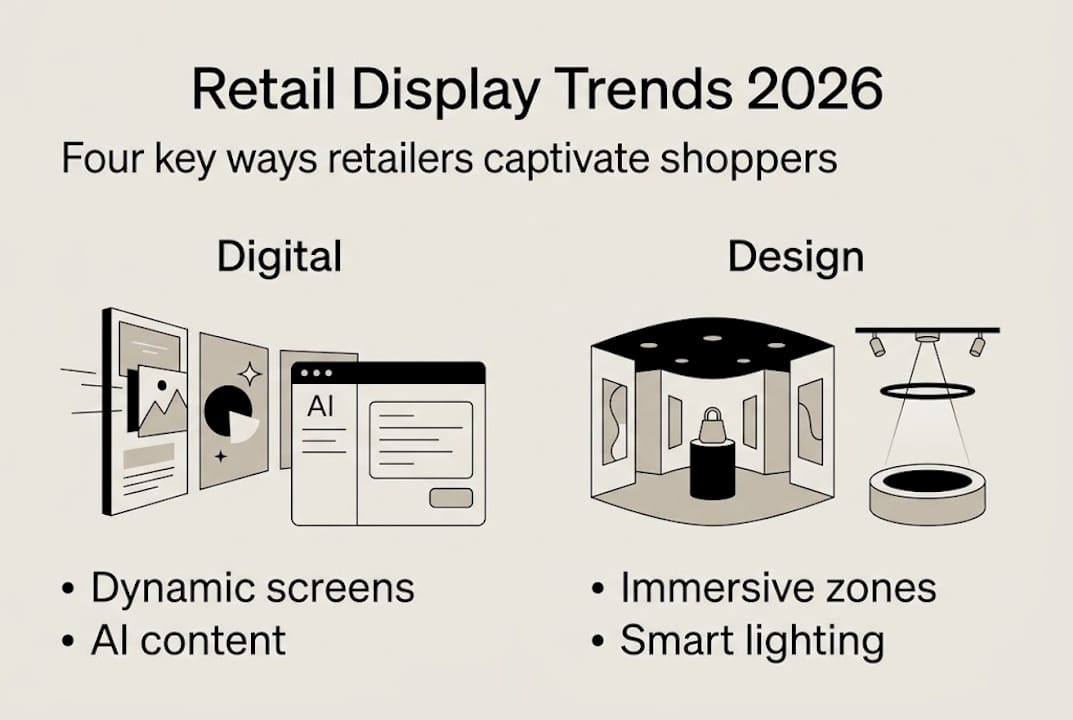
As the stakes rise for in-store experience, digital technologies are rapidly reshaping what’s possible in retail displays. Screens, sensors, and smart software are replacing traditional signage, and the results are measurable.
Digital screens offer something static displays simply cannot: dynamic, updatable content. A single screen can rotate seasonal promotions, showcase product demos, and display real-time inventory, all without printing a single poster.
Sensors and QR/NFC technology bridge the gap between physical and digital journeys. A customer scans a QR code on a wine display and is instantly taken to tasting notes, pairing suggestions, and online purchase options. That kind of seamless experience is exactly what modern shoppers expect. Check out interactive display examples to see how retailers are making this work in practice.
AI is raising the bar even further. According to Deloitte’s outlook, 68% of retailers expect significant AI deployment in the near term, and 26% specifically want personalized AI recommendations embedded in their displays. That means content adapts based on time of day, customer demographics, and even real-time foot traffic patterns.
Analog vs. digital display: A quick comparison
| Feature | Analog display | Digital display |
|---|---|---|
| Content updates | Manual, costly | Instant, remote |
| Personalization | None | AI-driven |
| Engagement tracking | None | Real-time analytics |
| Long-term cost | High (print) | Lower (cloud-managed) |
| Customer interaction | Passive | Active (touch, NFC, QR) |
For retailers in hospitality-adjacent sectors, the opportunity is equally strong. Drinks display trends in hospitality show how even experiential environments are moving toward digital-first presentation strategies. Digital signage is also transforming guest experience in hospitality, offering lessons retail brands can directly apply.
“The retailers winning in 2026 are not the ones with the biggest budgets. They are the ones using digital tools to create relevance at every customer touchpoint.”
Design trends that drive attention and engagement
Beyond technology, the physical design and emotional feel of displays still determine whether shoppers stop, browse, and buy. Great design is not decoration. It is strategy.
Lighting is one of the most underestimated tools in visual merchandising. Lighting influences 65% of consumer purchasing decisions in-store. Warm accent lighting draws attention to hero products. Dynamic LED systems can shift color temperature throughout the day to match natural light and maintain visual energy. Retailers who invest here see returns quickly.
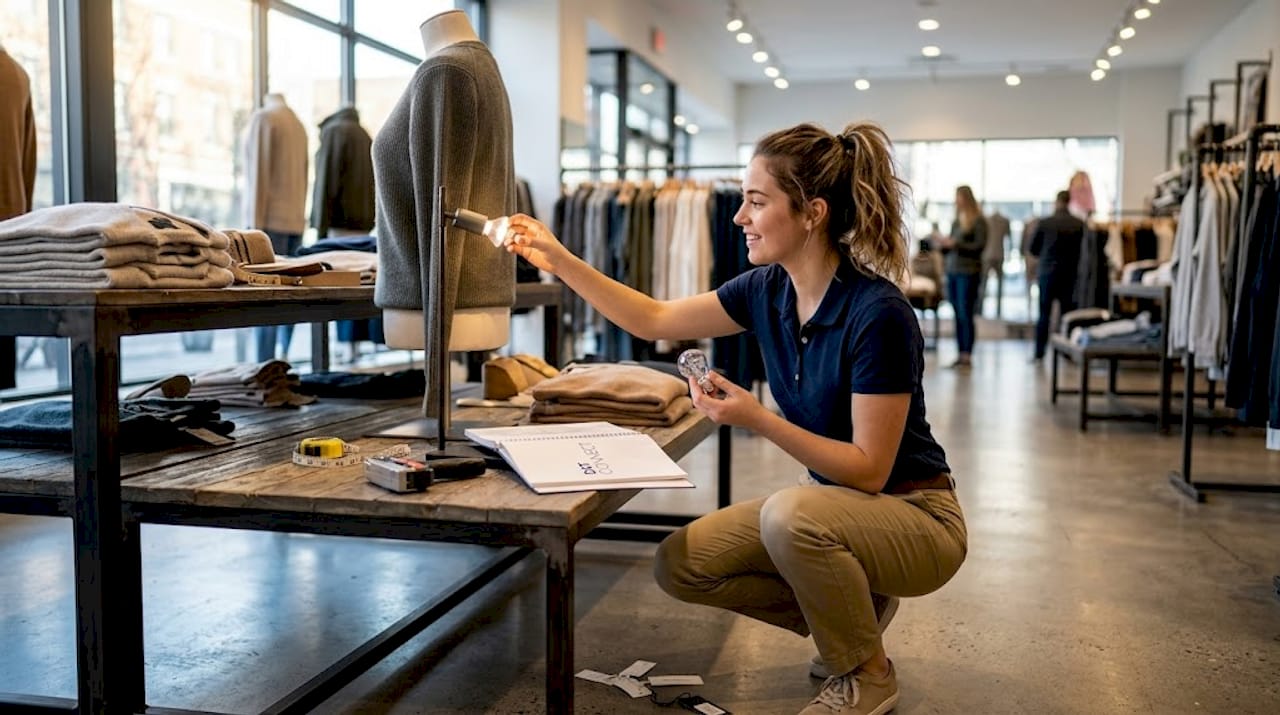
Immersive and sensory displays are gaining serious traction. Think beyond the product on a shelf. Retailers are creating curated environments where texture, scent, sound, and movement work together to tell a story. A skincare brand might recreate a spa corner. A spirits retailer might build a tasting bar atmosphere using layered lighting and branded glassware. The visual impact of beverage displays illustrates how atmosphere directly influences purchase intent.
Storytelling through display design is now a proven conversion driver. When the visual narrative connects a product to a lifestyle, customers stop thinking about price and start imagining ownership. Your digital display content ideas resource covers how to bring these narratives to life across screens and physical elements.
How to apply new design trends step by step:
- Audit your current displays for lighting gaps and static content.
- Identify your top three hero products per category and design around them.
- Add one interactive or sensory element per display zone.
- Introduce digital screens to layer storytelling content on top of physical fixtures.
- Test the layout with real customers and collect feedback before full rollout.
If you’re managing multiple store locations, learn how to manage retail screens efficiently across your portfolio.
Pro Tip: Avoid sensory overload. Immersive displays work best when one sense leads. Choose lighting or scent or sound as your primary engagement tool per zone, then layer subtly. Too many stimuli at once push customers away rather than pulling them in.
Personalization and data-driven display strategies
With attention-seeking design setting the stage, retailers need tools to connect those moments with what customers actually want. Personalization is no longer a premium feature. It is the baseline expectation.
Retailers now gather engagement data through cameras with anonymized analytics, in-store Wi-Fi behavior tracking, loyalty app integrations, and point-of-sale systems. This data tells you which display zones attract the most dwell time, which products get picked up but not purchased, and when foot traffic peaks by hour and day.
AI uses that data to adapt display content automatically. A display near the entrance might shift from a general promotion in the morning to a targeted offer for loyalty members in the afternoon, triggered by real-time data feeds. Personalized AI recommendations are wanted by 26% of customers in-store, and that number is growing fast.
What to personalize in your retail displays:
- Product recommendations based on purchase history or browsing behavior
- Promotional offers timed to customer segments (new visitors vs. returning loyalists)
- Interactive elements such as quizzes or product configurators tied to customer preferences
- Language and tone adapted to regional demographics or store-specific audiences
- Visual content swapped out based on seasonality, events, or local trends
For brands targeting premium segments, personalized luxury displays demonstrate how exclusivity and data can coexist beautifully. You can also explore display template options that make personalized content creation faster and more consistent.
Pro Tip: Over-personalization can feel intrusive. Stick to behavioral signals collected in aggregate rather than individual tracking. Customers respond well to relevance but pull back when displays feel like surveillance. Keep personalization helpful, not hyper-targeted.
Measuring impact: Analytics, KPIs, and retail ROI
Implementing high-impact displays is only half the equation. Knowing what works and why closes the loop.
Visual merchandising boosts sales by up to 37%, and with global retail projected to hit $31.7 trillion by 2025, the financial stakes for getting displays right have never been higher. That means measurement is not optional. It is essential.
The key performance indicators every retail marketer should track include dwell time (how long customers engage with a display), interaction rate (how many customers touch, scan, or respond to the display), sales lift (revenue increase tied to a specific display or campaign), and conversion rate (the percentage of display interactions that result in a purchase).
How to track ROI from display concept to conversion:
- Define your baseline: record current sales, foot traffic, and engagement metrics before any changes.
- Set specific goals for each display zone (e.g., increase dwell time by 20% in six weeks).
- Install analytics tools: cameras with heat mapping, QR code tracking, or NFC tap counters.
- Run A/B tests by rotating display content and comparing results across identical time periods.
- Review results monthly and adjust content, lighting, or layout based on real data.
- Calculate ROI by comparing sales lift to total display investment including design, tech, and labor.
For practical methods on measuring display engagement, case studies show which KPIs matter most in different retail categories. If you’re building a business case internally, the guide on ROI from digital displays provides a strong framework to follow.
Continuous testing separates retailers who grow from those who plateau. A display that worked in Q1 may underperform in Q3. Seasonal shifts, product mix changes, and evolving customer preferences all require ongoing adaptation.
Practical tips: Implementing 2026 display trends in any retail environment
No matter your retail size or focus, the path to next-generation displays is accessible with smart, practical steps.
The visual merchandising market in the US is projected to grow at a CAGR of 4.2% through 2030. That sustained growth reflects the fact that investing in display quality pays off across all store formats, not just flagship locations.
Must-do display upgrades for 2026:
- Replace static printed signage with at least one digital screen per major product zone
- Add QR codes to high-margin products linking to reviews, demos, or loyalty rewards
- Conduct a lighting audit and upgrade to LED accent lighting where needed
- Build a content calendar for display updates tied to promotions and seasonality
- Test one immersive or interactive element per quarter and measure its effect on dwell time
- Use a cloud-based content management system to manage all screens remotely
For small businesses, modular digital display solutions offer entry-level pricing with room to scale. A single screen managed through a platform like DST Connect can replace dozens of printed signs and be updated in minutes. Explore display template best practices to get started without a design team.
Large chains benefit from centralized management, where one team controls content across hundreds of locations simultaneously. This consistency strengthens brand identity while allowing local customization. Tips on creating attractive digital displays apply across both ends of the scale.
For event-driven retail and experiential formats, the 2025 event display guide offers creative direction that translates well into permanent store environments.
“The best retail displays in 2026 are not built once. They are managed, tested, and refined continuously by teams who treat display strategy as a living system.”
Pro Tip: Start with one high-traffic zone and get it right before scaling. A single well-executed digital display outperforms five mediocre ones every time.
Why the most memorable retail displays defy the obvious
Here is an uncomfortable truth about trends: the retailers chasing every new technology tend to produce displays that feel cluttered and cold. The brands building real loyalty are the ones who use technology selectively, always in service of a story.
The most effective displays in 2026 will not be the flashiest. They will be the ones that make a customer feel something. That might mean a beautifully lit product paired with a single compelling sentence on a digital screen. It might mean an interactive element that is genuinely fun rather than gimmicky. Engagement with interactive displays works best when the interaction itself feels meaningful, not obligatory.
Long-standing retail brands understand this intuitively. They blend innovation with restraint. They know that a well-placed spotlight and a clear brand message will outperform a touchscreen nobody asked for. The advice here is to pick the trends that align with your brand’s voice and your customer’s actual behavior, and ignore the rest with confidence.
Enhance your retail display strategy with DST Connect
For marketers ready to implement or scale their display strategy, the right digital tools make all the difference. DST Connect is a user-friendly digital signage software platform that gives retail teams full control over their displays without needing technical or design expertise. Choose from over 700 professionally designed templates, customize content through a drag-and-drop editor, and manage screens across multiple locations from a single cloud-based dashboard. Whether you are a boutique retailer or a multi-location chain, DST Connect adapts to your needs and budget. Visit the DST Academy for free resources, tutorials, and practical guidance to get started today.
Frequently asked questions
What are the most important retail display trends for 2026?
Digital integration, personalized AI content, immersive designs, and advanced analytics now define successful retail displays. AI-driven personalization and real-time content updates are rapidly becoming the standard expectation across all retail sectors.
How does digital signage affect customer engagement?
Digital signage delivers dynamic, real-time content that responds to customer behavior, driving higher interaction and purchase rates. Sales increases up to 37% have been attributed to strong visual merchandising strategies that include digital display elements.
What data should retailers track to improve their displays?
Track dwell time, interaction rates, sales uplift, and conversion rates to build a clear picture of display performance. Analytics and performance KPIs are the foundation for continuous display improvement and informed investment decisions.
Is it possible to implement modern display trends on a small budget?
Yes, small-budget retailers can start with a single digital screen and a modular content management platform, then scale over time. The growing visual merchandising market has driven accessible, affordable digital display tools designed specifically for smaller operations.
Recommended
- Examples of interactive displays to boost engagement
- How to engage audiences with signage: proven strategies for 2026
- Optimize your office digital display process in 2026
- Top interactive menu board examples to boost engagement
- 7 Essential Retail Signage Trends 2025 for UK Businesses – PromoSigns.co.uk
Enjoyed this blog?
Continue with the previous or next article and discover more ideas, insights and inspiration from DST Connect.